Angled Leg Vs Vertical Leg Stages

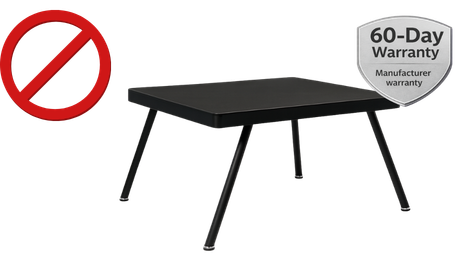
You may have seen angled-leg stage designs on the market, such as MyStage and other fold-up styles. They can look innovative and are often marketed as space-saving solutions. In practice, angled-leg stage designs route a portion of the load diagonally through joints, resulting in a more complex load path. While this approach may be suitable for certain applications or occasional setups, it introduces additional variables compared to designs that transfer weight directly downward.
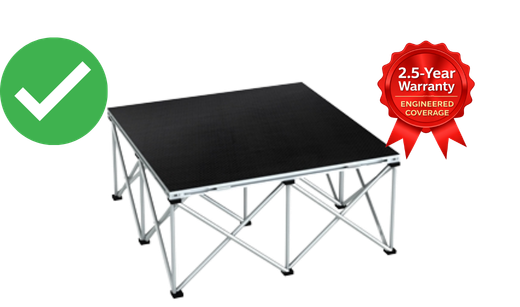
By contrast, the Intellistage accordion riser system utilizes a 9-point vertical support structure, distributing the load across multiple evenly spaced contact points beneath the platform. This is fundamentally different from designs relying on only 4 or 5 legs—or angled supports—where loads are concentrated at fewer points and often redirected laterally through joints. More support points mean reduced point loading, improved rigidity, and greater overall platform stability, especially under dynamic, real-world use.
Many angled-leg stage designs promote higher weight ratings derived from theoretical calculations rather than physical testing. Intellistage validates performance through real world physical load testing with applied weight and measured deflection. Load-path geometry matters. A vertical load path transfers force straight down through the frame and legs, creating the most predictable, testable, and repeatable structural behavior. This design allows Intellistage to measure real-world deflection under load, delivering verified performance data—not just calculated capacity.
By prioritizing direct load paths and real-world testing, Intellistage delivers consistent performance over time in professional environments where stability, rigidity, and repeatable results matter.
 INTELLISTAGE V.S. INTELLISTAGE V.S. |
 Angled Leg Designs Angled Leg Designs |
|
|---|---|---|
| Structural Load Path | Pure vertical compression through frame and leg for maximum strength and longevity. | Load splits vertically + horizontally, creating side pressure on joints. |
| Warranty | 2.5 Years | 60 days |
| 9 Point Support | 9-point vertical support system spreads loads evenly straight down reducing point loading and increasing rigiidity. | Fewer legs and angled supports concentrate loads at limited points and redirect forces laterally, increasing flex and joint stress. |
| Frame Stress | 9 total points of contact per riser (4 locking points) eliminate sway/flex even under dynamic loads | Constant shear + torsion at welds/pivots may cause joints loosen over time. |
| Stability / Sway | 9 total points of contact per riser (4 locking points) eliminate sway/flex even under dynamic loads | 4 to 5 points of contact...Angled geometry can flex or wobble; often needs center leg or braces for stability |
| Weight Capacity | 2,400 lbs per 4'×4' deck, physically load-tested with applied weight and measured deflection to verify real-world performance. | Higher weight ratings derived from theoretical calculations rather than physical testing. |
| Modular Compatibility | Straight legs align perfectly for seamless multi-deck setups. | Legs flare outward, and may cause interference when joined. |
| Platform Shapes | Available in Square, Triangle and quarter round platforms. So multiple shapes can be created | Only available in square platforms |
| Maximum Safe Height | Stable to 64" with consistent load performance. | Limited height capacity |
| Noise & Vibration | Rigid frame with tight connections dampens vibration and reduces rattling, giving a more solid, "tour-grade" feel. | Extra joints and lighter frames can transmit more rattle or vibration under movement or loud bass |
| Best Use Case | Professional staging — schools, churches, tours, events. | Small temporary or home display stages. |